CoderFunda
  • Home
  • About us
    • Contact Us
    • Disclaimer
    • Privacy Policy
    • About us
  • Home
  • Php
  • HTML
  • CSS
  • JavaScript
    • JavaScript
    • Jquery
    • JqueryUI
    • Stock
  • SQL
  • Vue.Js
  • Python
  • Wordpress
  • C++
    • C++
    • C
  • Laravel
    • Laravel
      • Overview
      • Namespaces
      • Middleware
      • Routing
      • Configuration
      • Application Structure
      • Installation
    • Overview
  • DBMS
    • DBMS
      • PL/SQL
      • SQLite
      • MongoDB
      • Cassandra
      • MySQL
      • Oracle
      • CouchDB
      • Neo4j
      • DB2
      • Quiz
    • Overview
  • Entertainment
    • TV Series Update
    • Movie Review
    • Movie Review
  • More
    • Vue. Js
    • Php Question
    • Php Interview Question
    • Laravel Interview Question
    • SQL Interview Question
    • IAS Interview Question
    • PCS Interview Question
    • Technology
    • Other

13 March, 2023

ORM Caching Package for Laravel

 Programing Coderfunda     March 13, 2023     Laravel, Packages, php     No comments   

ORM Caching Package for Laravel


LaraCache is an ORM-based package for Laravel to create, update and manage cache items based on model queries. Using this package, you can cache queries that you use heavily throughout your application.

use Mostafaznv\LaraCache\Traits\LaraCache;
 
class Article extends Model
{
use LaraCache;
 
public static function cacheEntities(): array
{
return [
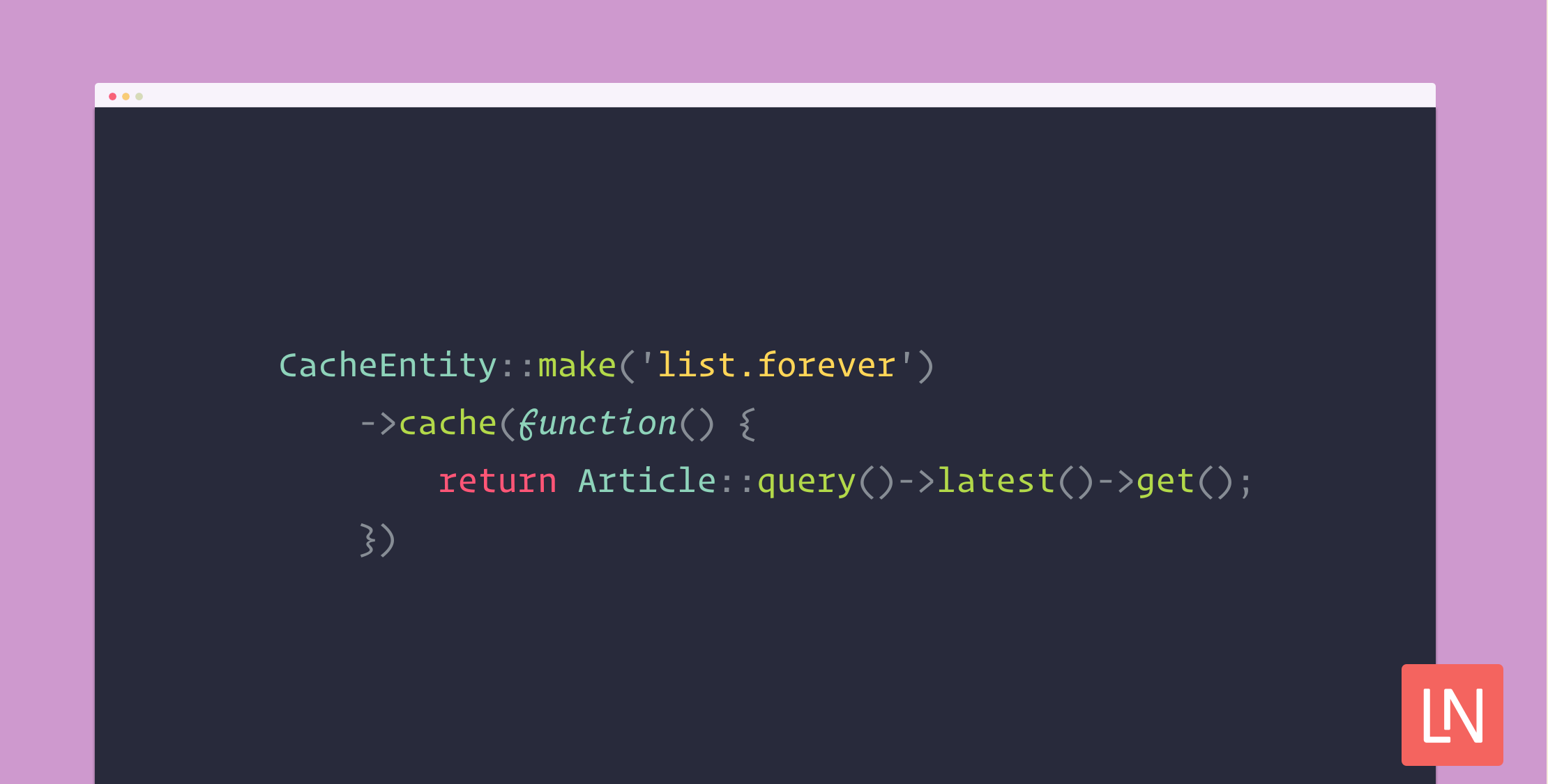
CacheEntity::make('list.forever')
->cache(function() {
return Article::query()->latest()->get();
}),
 
CacheEntity::make('latest')
->validForRestOfDay()
->cache(function() {
return Article::query()->latest()->first();
})
];
}
}

Using the cacheEntities method to define cached queries, Laracache will take care of the rest. To use the cached queries, you'll call the model like the following example:

use Mostafaznv\LaraCache\Facades\LaraCache;
 
 
$cache = Article::cache()->get('latest');
// or
$cache = LaraCache::retrieve(Article::class, 'latest');

With this package, you can control cache with the following features:

  • Enable/disable cache
  • Update cache manually
  • Update all cache entities manually
  • delete cache
  • Control CacheEntity duration using fluent methods or a ttl() method

I thought the following manual cache update method was neat, refreshing your cache on-the-fly:

Article::cache()->update('latest');
// or
LaraCache::update(Article::class, 'latest');

You can learn about this package, get full installation instructions, and view the source code on GitHub.

  • Share This:  
  •  Facebook
  •  Twitter
  •  Google+
  •  Stumble
  •  Digg
Email ThisBlogThis!Share to XShare to Facebook
Newer Post Older Post Home

0 comments:

Post a Comment

Thanks

Meta

Popular Posts

  • Blade Component to Render Markdown in Laravel
      Laravel Markdown   is a highly configurable markdown renderer and Blade component for Laravel by the folks at   Spatie : The package featu...
  • There are two solutions for one board, using different chips. But one of their i2c address is the same. How to resolve conflict in one dts?
    Two chips A and B conflict with 0x62 on i2c bus 10. If A@62 and B@62 are configured on dts, Linux loads the driver of A. If B@62 is in front...
  • Real-Time Chat Package for Laravel
      Chatify   is a Laravel package by   Munaf Aqeel Mahdi   that adds a complete real-time chat system to your application without any additio...
  • Using Laravel Model Factories in your tests
    Laravel Model factories are one of the best features you can use in your application when it comes to testing. They provide a way to define ...
  • Detecting .NET8 with Inno Setup and InnoDependenciyInstaller
    I am looking at using InnoDependencyInstaller and it has a function that it uses under the hood: Dependency_AddDotNet80 procedure Depend...

Categories

  • Ajax (26)
  • Bootstrap (30)
  • DBMS (42)
  • HTML (12)
  • HTML5 (45)
  • JavaScript (10)
  • Jquery (34)
  • Jquery UI (2)
  • JqueryUI (32)
  • Laravel (1017)
  • Laravel Tutorials (23)
  • Laravel-Question (6)
  • Magento (9)
  • Magento 2 (95)
  • MariaDB (1)
  • MySql Tutorial (2)
  • PHP-Interview-Questions (3)
  • Php Question (13)
  • Python (36)
  • RDBMS (13)
  • SQL Tutorial (79)
  • Vue.js Tutorial (69)
  • Wordpress (150)
  • Wordpress Theme (3)
  • codeigniter (108)
  • oops (4)
  • php (853)

Social Media Links

  • Follow on Twitter
  • Like on Facebook
  • Subscribe on Youtube
  • Follow on Instagram

Pages

  • Home
  • Contact Us
  • Privacy Policy
  • About us

Blog Archive

  • July (4)
  • September (100)
  • August (50)
  • July (56)
  • June (46)
  • May (59)
  • April (50)
  • March (60)
  • February (42)
  • January (53)
  • December (58)
  • November (61)
  • October (39)
  • September (36)
  • August (36)
  • July (34)
  • June (34)
  • May (36)
  • April (29)
  • March (82)
  • February (1)
  • January (8)
  • December (14)
  • November (41)
  • October (13)
  • September (5)
  • August (48)
  • July (9)
  • June (6)
  • May (119)
  • April (259)
  • March (122)
  • February (368)
  • January (33)
  • October (2)
  • July (11)
  • June (29)
  • May (25)
  • April (168)
  • March (93)
  • February (60)
  • January (28)
  • December (195)
  • November (24)
  • October (40)
  • September (55)
  • August (6)
  • July (48)
  • May (2)
  • January (2)
  • July (6)
  • June (6)
  • February (17)
  • January (69)
  • December (122)
  • November (56)
  • October (92)
  • September (76)
  • August (6)

Loading...

Laravel News

Loading...

Copyright © CoderFunda | Powered by Blogger
Design by Coderfunda | Blogger Theme by Coderfunda | Distributed By Coderfunda